
Last updated November 17, 2026
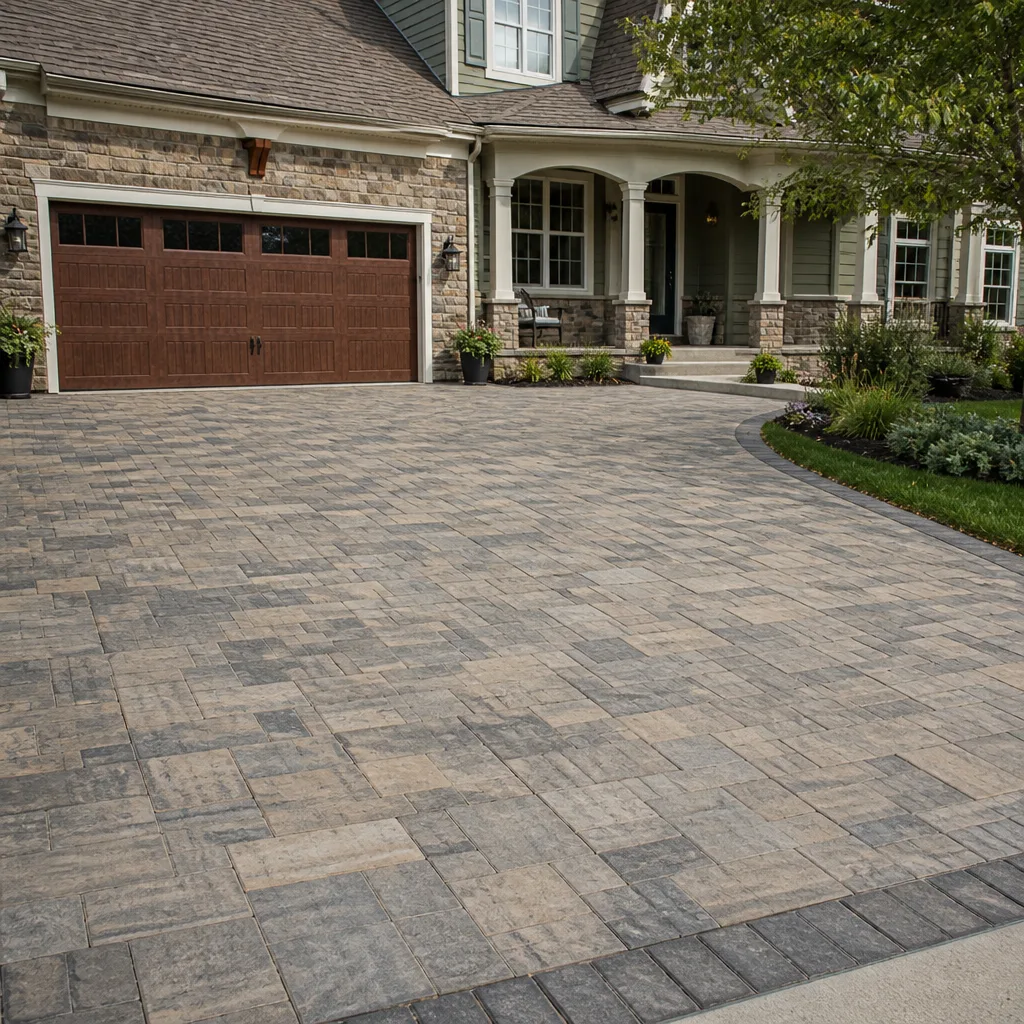 Driveway & pavers
 Kitchen remodeling
 Bathroom remodeling
 Home additions & ADU
 Roofing
 Windows & doors
 Fence
Free written scope consultation - allowances, timeline, and change-order rules on paper before a single trade is scheduled
Driveway & Pavers Troubleshooting in Vacaville: Common Problems and How to Fix Them
If your pavers are sinking in the same spot every rainy season, patching them is a waste of money. That pattern almost always signals a French drain failure or an irrigation line leak you haven’t found yet. The fix isn’t new sand or a fresh tamp – it’s finding what’s moving the water or the soil underneath. Most homeowners in Vacaville treat what they can see: a wobble, a crack, a low corner holding water. The real problem usually sits 6 to 12 inches lower, in the base. This guide gives you a diagnostic framework, not just a repair checklist. You’ll learn how to trace sinking, cracking, and shifting back to its root cause, tell a heat problem from a water problem, judge whether the original install was built right, and know when re-sanding is honest versus when a section has to come out.
Quick Answer
Most driveway and paver problems in Vacaville come from base and drainage failures, not surface wear, which is why patching the same spot keeps failing. Trace the symptom first – sinking, shifting, or cracking each points to a different root cause. Once you know the cause, you can decide whether a section needs re-sanding and re-setting or a full base rebuild, and a written estimate will price the job by scope rather than guesswork.
Styles & brands we work with
- Kitchen remodeling
- Bathroom remodeling
- Home additions & ADU
- Roofing
- Windows & doors
- Driveway & pavers
- Fence
Table of Contents
- The Root-Cause Decision Tree: Diagnose Before You Repair
- Vacaville Failure Patterns: Summer Heat and Winter Water in Clay
- Was Your Driveway Under-Built? How to Check
- Re-Sand or Pull and Re-Set? The Honest Answer
- Choosing Polymeric Sand for Vacaville’s Temperature Swings
- Drainage and Grading: The Problems Nobody Fixes First
- What Paver Repair Costs in Vacaville
- Common Mistakes to Avoid
The Root-Cause Decision Tree: Diagnose Before You Repair
Every paver failure shows up as one of three symptoms: sinking, shifting, or cracking. Each one narrows the root cause fast. Before you call anyone or buy a bag of sand, walk the driveway and label what you see.
Sinking (a dip or bowl that holds water)
Sinking is a base or subgrade problem. The pavers themselves don’t compress – the material under them does. Work through this order:
- Check the low spot after rain. If water stands for more than a day, drainage is failing or the subgrade is settling.
- Look uphill. A dip near a downspout, a slope, or the garage apron often traces back to water dumping onto the pavers.
- Probe for softness. A screwdriver pushed into the joint should meet firm base. If it slides in easily, the base has lost compaction.
- Find the irrigation line. A slow leak under a driveway saturates clay soil and sinks pavers over months. This is the most commonly missed cause.
- Compare to the season. If it sinks a little every winter and stays put in summer, water is entering the base and not leaving.
Shifting (joints opening, edges spreading)
Shifting usually means edge restraint failure or joint sand loss. Pavers move because nothing is holding the field tight. Check the border first.
Cracking (a paver itself breaks)
A single cracked paver is often a point load or a base void directly beneath it. A crack that runs in a line across many pavers points to base settlement along that seam. If a whole row cracks in the same place, the base under that row is unsupported.
Label the symptom, work the list, and you’ll usually land on one root cause in under ten minutes. That diagnosis is what changes a repair from temporary to permanent. When the pattern points to something bigger than a single paver, our driveway & pavers team can assess the whole system – base, drainage, and edge restraint – in one visit.
Vacaville Failure Patterns: Summer Heat and Winter Water in Clay
Vacaville deals its pavers a tough hand. Summers push past 95°F and bake the surface. Winters are mild but wet, and the rain has to go somewhere. Under a lot of Vacaville properties sits clay-heavy soil that swells when it’s wet and shrinks as it dries. That combination drives most of the failure patterns we see here.
Here’s how each season leaves its mark, and how to spot it.
- Heat expansion lines. In late summer, pavers expand against tight restraints and joints close up. You’ll see sand pushed up out of joints and pavers butting tight with no gap. That’s thermal movement, not necessarily a base failure.
- Winter settlement dips. Clay takes on water in the rainy months and softens. Pavers over an under-compacted base sink into it. The dip appears or deepens each winter – that seasonal rhythm is the tell.
- Efflorescence. A white chalky haze on the surface means moisture is moving up through the pavers and evaporating. It’s cosmetic, but it points to water in the base you’ll want to address.
- Joint sand washout. Heavy winter rain flushes plain joint sand out of the joints, especially on a slope. Once the sand is gone, pavers loosen and the whole field starts to shift.
- Edge spread at the apron. Where the driveway meets the street, water from the road and the slope of the apron can erode the border. Look for pavers stepping out past the restraint.
The pattern matters more than the single spot. A dip that shows up every winter and flattens every summer is telling you about drainage and compaction. A tight joint in August that opens back up by December is telling you about thermal movement and sand choice. Read the season into the symptom and you’ll know which fix will actually hold in Vacaville’s climate.
Was Your Driveway Under-Built? How to Check
Plenty of paver failures aren’t really repairs – they’re corrections. The original install was under-built, and you’re just now seeing it. A paver driveway is only as good as the base under it, and shortcuts there are invisible for a year or two before they surface.
You can check the essentials without pulling up the whole driveway.
- Look at the edge. Pull back the border or dig a small test hole at the outer edge, where it’s least disruptive. Class II base should be compacted and firm, not loose or full of soft pockets.
- Measure base depth. For a residential driveway, the compacted aggregate base is typically in the range of 4 to 6 inches for light vehicle traffic, often more where the subgrade is weak. Ask what was specified and confirm it’s there. Thin base is the single most common shortcut.
- Check for fabric. A separation geotextile between the clay subgrade and the base keeps fine soil from pumping up into the gravel. Its absence in clay country is a red flag.
- Test compaction. Compacted base should feel like dense, hard-packed material. If a probe sinks, it wasn’t compacted in lifts and the base is soft.
- Look at the restraints. Edge restraints should be spiked or pinned into firm base. One that’s loose, or missing, lets the whole field spread.
- Check the joints. Full, dense joint sand is what locks pavers together. Wide, empty, or shallow joints suggest the install was rushed or the sand was never finished.
If two or three of these are off, the problem isn’t the pavers – it’s the base. No amount of re-sanding will fix an under-built driveway, and pulling just the sunken section will leave the rest of the field to fail next. When an under-built driveway is the issue, the honest answer is often a partial or full rebuild, which is why the diagnosis comes before the price.
Re-Sand or Pull and Re-Set? The Honest Answer
Re-sanding is legitimate when the pavers are tight, the base is sound, and the problem is only that the joints have emptied out. Pull and re-set is the only honest fix when the base under a section has moved. Restraint, base condition, and paver tightness decide which one you’re dealing with.
Re-sanding and re-tamping is the right call when:
- The pavers are firm underfoot with no rocking or give.
- The joints are low on sand but the field isn’t moving.
- The problem is cosmetic washout, efflorescence, or seasonal sand loss on a slope.
- The edge restraint is intact and holding.
Pull and re-set is the only answer when:
- Pavers rock or tip when you walk on them – the sand bed and base have moved.
- A section sinks seasonally and stays down – base or drainage failure.
- The soil beneath feels soft or wet.
- The edge is spreading because the restraint has failed.
- You find a crack line running across several pavers – base settlement along the seam.
Re-sanding a section whose base has moved is the classic waste of money. The sand washes in, looks right for a season, then the pavers sink back into the same void. Pulling the section lets a crew recompact or rebuild the base, re-set the restraint, and put the pavers back so the fix actually holds. In our experience, once you diagnose the root cause, the choice between the two becomes obvious – and it’s almost never re-sanding when the pavers are already moving.
Choosing Polymeric Sand for Vacaville’s Temperature Swings
Standard joint sand fails in Vacaville because it can’t handle the swing from a baking summer to a wet winter. Plain sand washes out, blows out, and lets pavers loosen. Polymeric sand, which sets firm after you wet it, is the better choice here – but the product matters as much as the decision.
What to look for when selecting a polymeric sand for Vacaville’s climate:
- Temperature tolerance. Look for a product rated to hold up past 95°F, since Vacaville summers push there. Cheaper polymers soften in the heat and the joints open back up.
- Flexibility. The polymer needs enough give to move with thermal expansion and contraction so it doesn’t crack and crumble in a cold snap.
- Drainage and permeability. A joint sand that sheds water instead of trapping it on the surface protects the base below during the wet season.
- Washout resistance. The right product resists rain erosion on a slope, where plain sand fails fastest.
- Fine vs. coarse. Match the polymer grit to your joint width – too coarse for a narrow joint and it won’t fill, too fine and it washes out.
Installation matters as much as the bag. The joints must be filled to about their top, compacted, topped off, swept clean, and then wetted exactly as the manufacturer specifies. Overwetting or wetted twice by a surprise rain leaves a haze on the pavers. Done right, a good polymeric sand is the single biggest upgrade you can make to a sound paver field – and it’s the part most under-built driveways skipped.
Drainage and Grading: The Problems Nobody Fixes First
Nearly every “pavers keep sinking” call traces back to water. Water in the base softens clay, swells soil, and undermines compaction. If you fix the surface first and never touch the drainage, the fix won’t hold. Diagnose where the water is coming from before anything else.
Common drainage failures on Vacaville driveways:
- Failed or missing French drain. A French drain that’s clogged with soil and roots or was never installed lets water sit under the pavers. A dip along the low side of a driveway is often the drain line’s failure showing on the surface.
- Irrigation leaks. A leak under a driveway saturates the subgrade quietly. Sinking that follows a downslope line is a strong sign.
- Downspouts dumping onto the pavers. A downspout that empties onto the driveway instead of away from it moves a lot of water into the base over the wet season.
- Flat or reverse grading. Pavers should slope away from the house and garage. A flat or back-sloped section holds water and softens the base under it.
- No drainage layer. A properly built paver driveway includes a compacted drainage-friendly base and, where needed, a drain to get water out. When that’s missing, water has nowhere to go but down.
The fix order is always the same: deal with where the water comes from, then deal with the base, then deal with the surface. Re-sanding before drainage is solved just delays the sink. When drainage and grading need real rework, that’s a scope question for a full estimate – and it’s the kind of whole-system correction we plan around on every project.
What Paver Repair Costs in Vacaville
Paver repair in Vacaville isn’t one price. It’s a range that tracks the root cause – a cosmetic re-sand costs a fraction of a section rebuild, which costs a fraction of a full re-base and re-set. The table below shows typical estimated line items so you can see where your diagnosis lands. These are estimates; the written estimate sets the final price.
- Re-sand with polymeric sand (whole driveway): a low-cost surface fix – priced per square foot, best for sound pavers with empty joints.
- Pull and re-set a small section (base recompaction included): mid-range, for localized sinking or a failed edge.
- Drainage correction (French drain repair or regrade): mid-range, often the real fix behind seasonal sinking.
- Edge restraint replacement: modest, but it’s what keeps the field tight afterward.
- Full re-base and re-set of a driveway: the highest scope, for an under-built or failing installation.
Why we don’t hand you a single number over the phone: the price depends on how much base has to be rebuilt, whether drainage has to move, and how much paver has to come up. A small section re-set and a full re-base are very different jobs, and pricing them as one number is how homeowners get surprised mid-project. A free estimate that diagnoses the cause first gives you a flat, written line-item quote – fixed pricing with no change orders once the scope is agreed. Call (877) 350-4314 to schedule your free estimate.
Common Mistakes to Avoid
- Re-sanding over a moving base. If the pavers rock or sink, new sand just hides the void for a season. Diagnose the base first or you’ll pay for the same fix twice.
- Patching the symptom, not the source. Sinking that returns every winter is drainage or a buried irrigation leak. Fixing the dip without fixing the water is a loop.
- Skipping the base depth check. Pull back the edge and confirm what’s under the pavers before spending on surface repairs. Thin or uncompacted base makes every other fix temporary.
- Using plain joint sand in Vacaville. Standard sand washes out and softens in the heat. A polymeric sand rated for the temperature swing holds far longer.
- Ignoring the edge restraint. A loose border lets the whole field spread. Repairing pavers without fixing the restraint is money spent to watch it fail again.
- Letting downspouts dump onto the driveway. Water from a roof empties a lot of moisture into the base over a wet winter. Move it away from the pavers before you repair them.
- Assuming it’s just cosmetic. Efflorescence and tight summer joints are cosmetic, but a crack line across several pavers is base settlement and won’t fix itself.
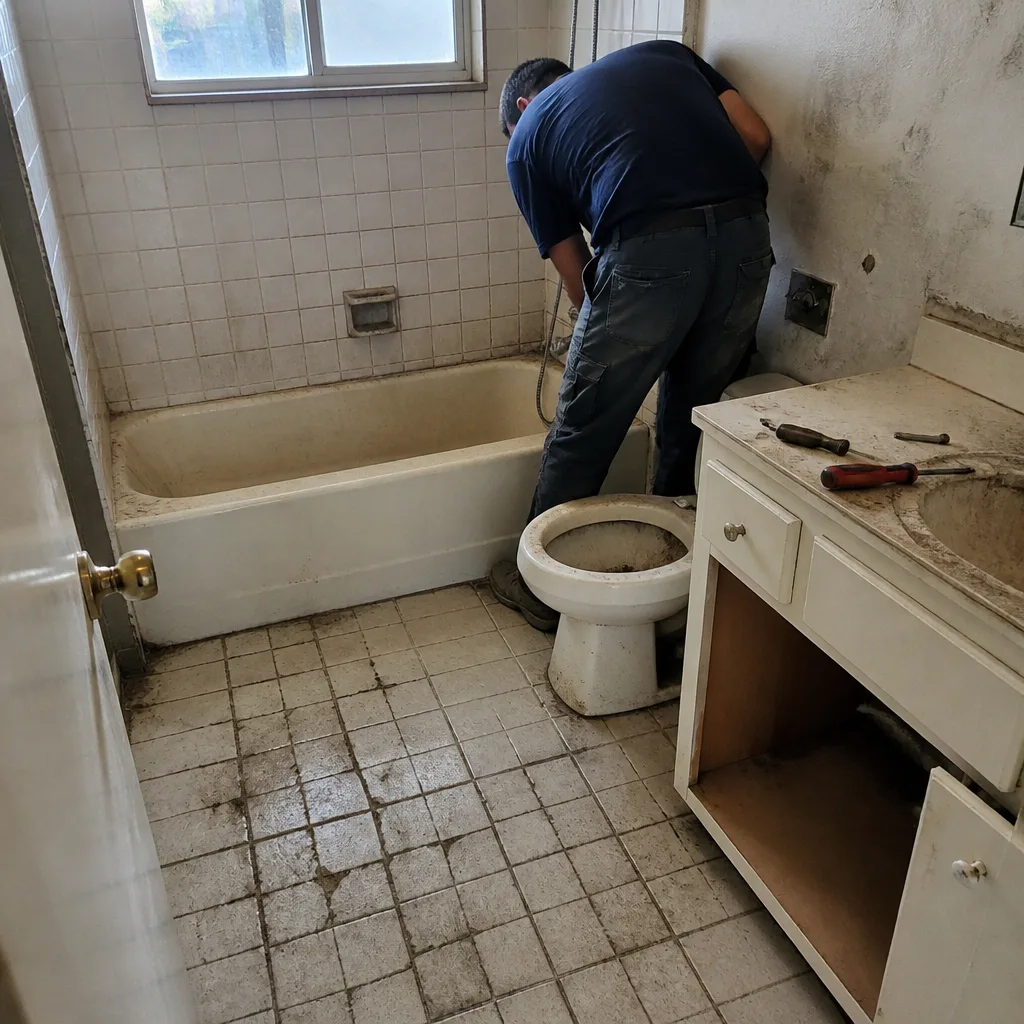
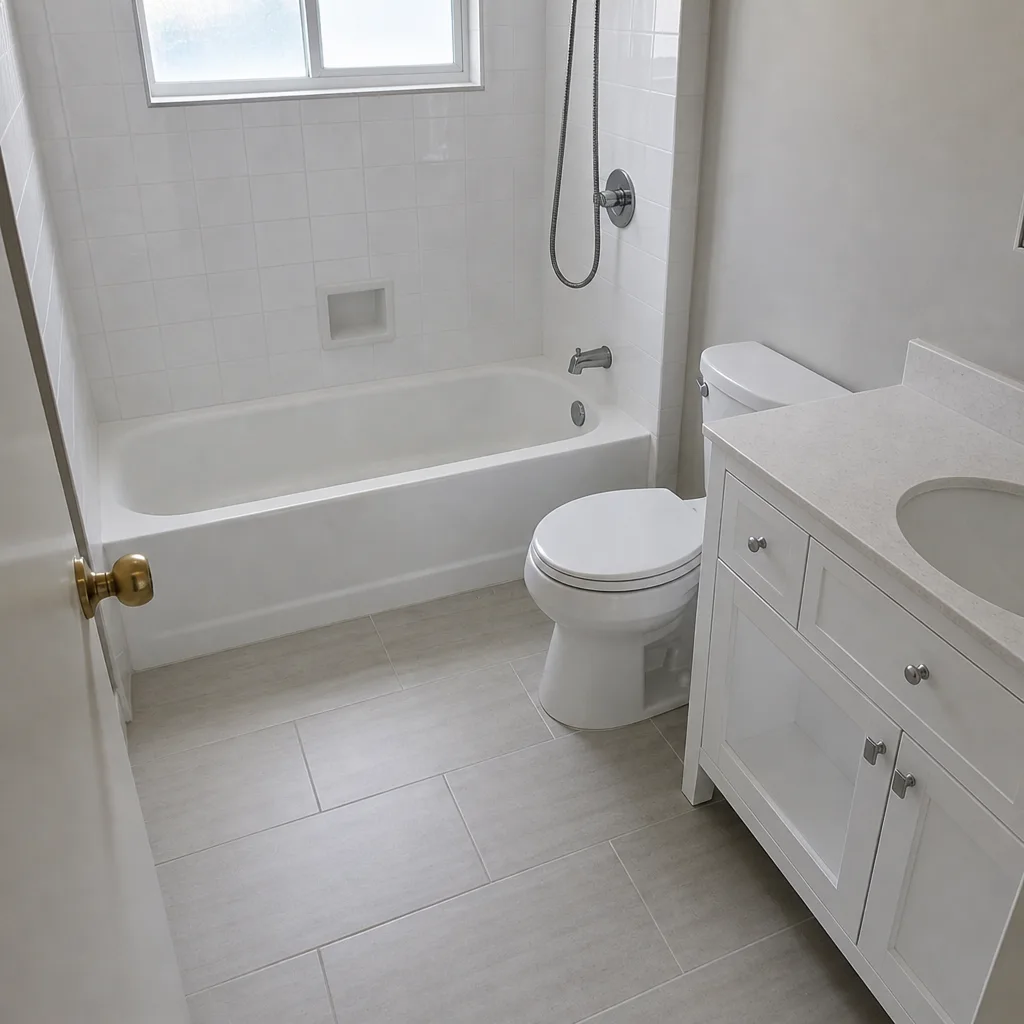
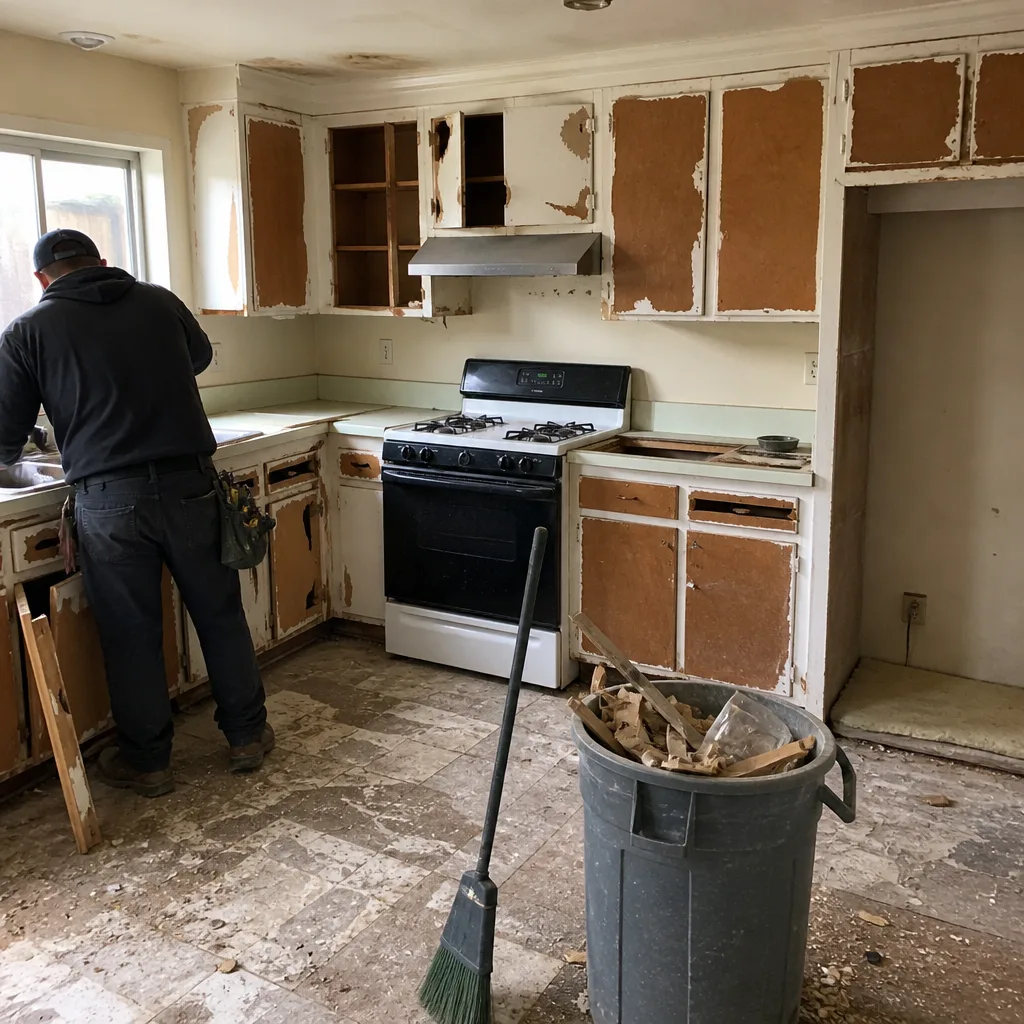
See the difference
 Before
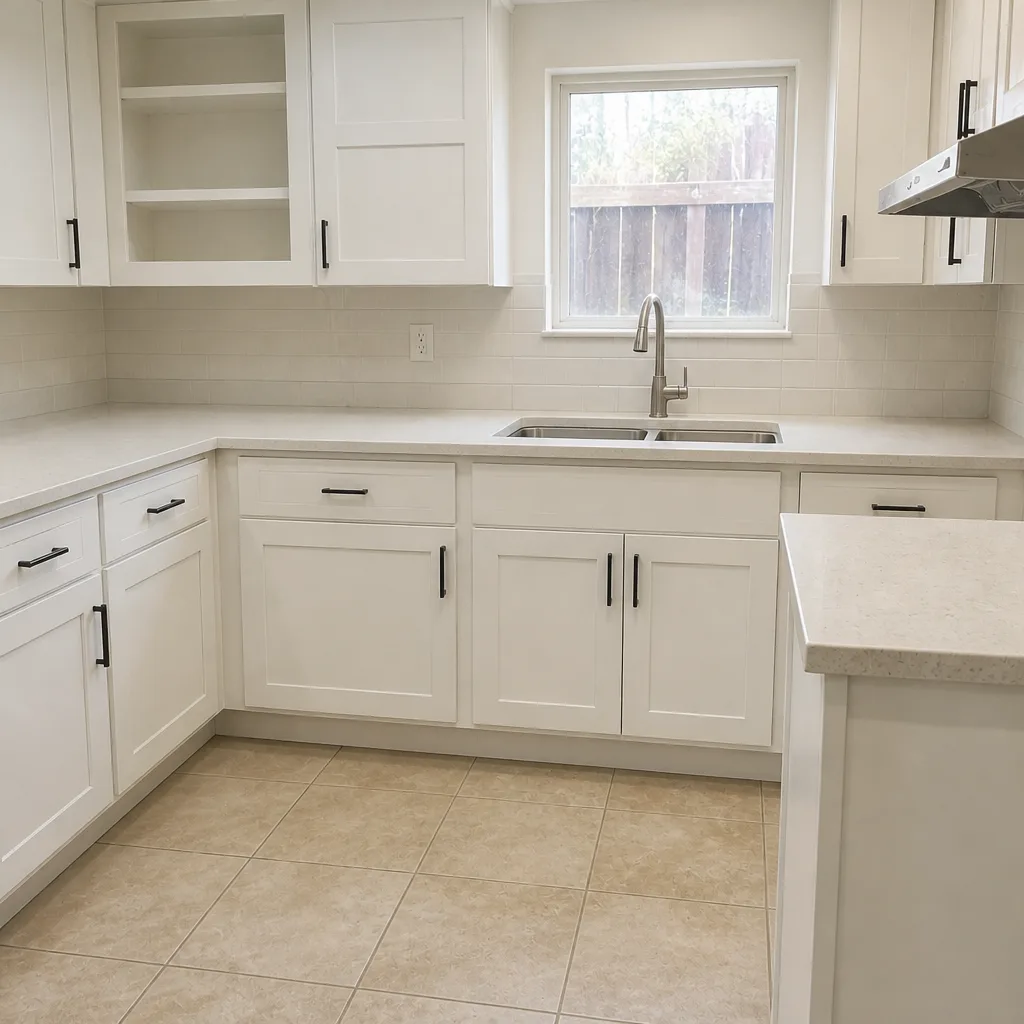 After
 Before
 After
 Before
 After
When to Call a Professional
Call a professional when the symptom points below the surface. If pavers rock or sink, if a dip holds water past a day, if a crack line runs across several pavers, or if the edge is spreading, the repair involves base, drainage, or restraint – not the surface. Those are jobs that need the section pulled and re-built, and they’re not a weekend project. It’s also time to call when the diagnosis lands on an under-built driveway, because the honest fix is a rebuild, not a patch. Construction Vacaville offers free estimates in Vacaville – call (877) 350-4314. We’ll diagnose the root cause, show you the line items, and quote the scope in writing before any work starts.
Frequently Asked Questions
Because it’s a drainage or base failure, not a paver problem. A dip that returns each wet season almost always means water is entering the base – a failing French drain, a buried irrigation leak, or back-sloped grading – and softening the soil under that section. Re-sanding that spot without finding the water source means it’ll be back. Call (877) 350-4314 for an exact quote – estimates are free.
It depends on the root cause. A whole-driveway re-sand with polymeric sand is the lowest-cost fix, a small section re-set or a drainage correction is mid-range, and a full re-base and re-set of an under-built driveway is the highest scope. The written estimate sets the final price. Call (877) 350-4314 to schedule a free estimate and get a flat, line-item quote.
Re-sanding is enough only when the pavers are firm, the base is sound, and the joints are simply low on sand. If the pavers rock, sink, or tip, or the edge is spreading, the base or restraint has moved and the section has to be pulled and re-set. Call (877) 350-4314 for an exact quote – estimates are free.
No. Once we diagnose the cause and agree the scope, the written estimate is fixed, with no change orders. The price is set per job by the written estimate, so the number you agree is the number you pay. Call (877) 350-4314 to schedule your free estimate.
A polymeric sand rated to hold past 95°F and engineered to stay flexible through the temperature swing. Standard joint sand washes out in winter rain and softens in summer heat, which is exactly what Vacaville throws at a driveway. Match the grit to your joint width and install it exactly per the manufacturer. Call (877) 350-4314 for an exact quote – estimates are free.
Often, yes. Pull back the edge and check base depth – compacted aggregate base for a light-traffic driveway is typically in the 4 to 6 inch range, more in weak soil – and look for a separation fabric over clay, firm compaction, and a spiked edge restraint. Two or three gaps mean the base is the problem, not the pavers. Call (877) 350-4314 to schedule a free estimate.
The Bottom Line
Most driveway paver problems in Vacaville aren’t surface failures – they’re base and drainage failures wearing a surface costume. Label the symptom, work the decision tree, and trace it to one root cause: base compaction, drainage, soil movement, or joint sand. Then choose the fix that matches. Re-sanding is honest only when the base is sound; pulling and re-setting is the only answer when it isn’t. Check whether the original install was built to depth, pick a polymeric sand that survives the heat-and-rain swing, and fix where the water comes from before you touch the surface. Do that, and the repair holds past one season.
Construction Vacaville handles driveways and pavers as one system – base, drainage, restraint, and surface – with material options from Belgard, Unilock, Techo-Bloc, Cambridge Pavers, and Tremron, so the fix matches the cause instead of covering it. From the driveway out to fence installation and up to the roofline, one contractor handles the whole property, alongside home additions & ADU work when you’re expanding, and Jam James Hardie siding and exterior upgrades when you want the envelope finished right. Prefab and modular options from Boxabl and Plant Prefab are part of the broader build capability too. Our technicians have up to 10 years of experience diagnosing what’s really under a sinking driveway.
Call (877) 350-4314 for a free estimate. We answer 24/7. Fast dispatch from 7am to 7pm, Sunday through Friday. You’ll get a written, line-item quote with fixed pricing and no change orders, so you know the scope and the number before any paver comes up. Start with a diagnosis, not a patch, and let the fix last more than one season.
Written by the team at Construction Vacaville.